XRP Investment Thesis: The Case for Market Leadership (Bull vs Bear)
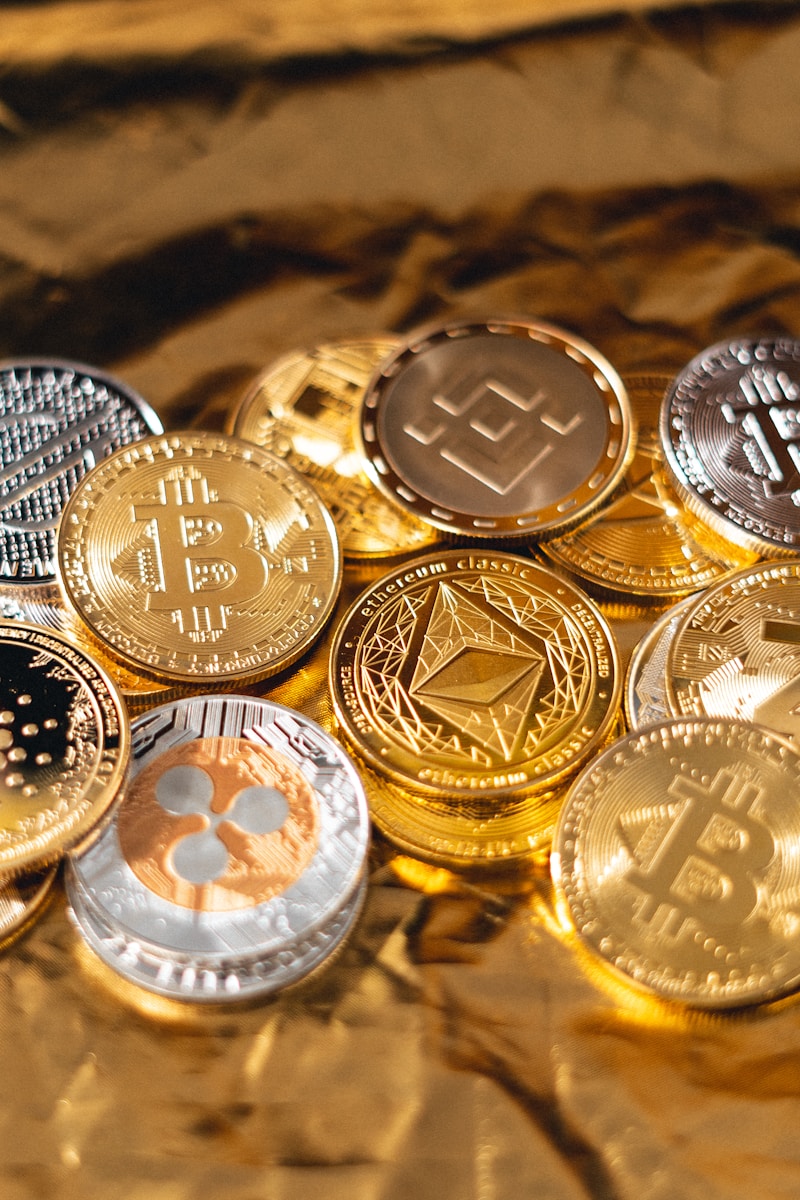
XRP is trading around $1.05–$1.10, ranked #6 by market cap (~$68 billion) — down roughly 70% from its July 2025 all-time high. Yet beneath the price action, Ripple has been quietly assembling something no other crypto company has: a full-stack, regulated financial infrastructure. This thesis examines both sides of the case, without the hype.
Key snapshot (as of August 6, 2026)
- Current price: ~$1.05–$1.10 | Market cap: ~$68 billion (#6 globally)
- Circulating supply: ~62.5 billion XRP
- Tokenized real-world assets (RWA) on XRPL: $4.3 billion — up from just $73M in Jan 2025 (58x in 19 months)
- XRPL active wallets: 7 million+ | RLUSD stablecoin circulation: ~$1.51 billion
- Spot XRP ETF AUM: ~$993 million | Cumulative ETF inflows: $1.51 billion
The Macro Case: The Global Payments Revolution
The global cross-border payments market is one of the largest addressable markets in finance — $194.6 trillion in annual cross-border spending (J.P. Morgan), projected to reach $320 trillion by 2032. SWIFT alone moves $530 billion daily across 11,500+ institutions.
XRP does not need to replace SWIFT to justify a significant valuation. The relevant market is the subset where a bridge asset can replace prefunding, correspondent banking, or slow settlement. Even a 0.1% capture of $194.6 trillion represents $194.6 billion in annual value routed — nearly three times XRP's current market cap.
The settlement efficiency gap is real: per FSB/BIS data, only 35% of global cross-border retail payments are credited within one hour, versus the G20 target of 75%. The XRPL settles in 3–5 seconds for a fee of roughly 0.00001 XRP.
Tokenization is the second macro driver. The tokenized asset market is projected to reach $16 trillion by 2030 (BCG), and the XRPL has emerged as a leading institutional tokenization chain with $4.3 billion in RWAs already live. Ripple's investments in ZILO (transfer agency) and Licuido (tokenization and collateral mobility) target the $10 trillion money market repo market and the $8.6 trillion transfer agency market.
The Micro Case: XRP Tokenomics
- Total supply: ~100 billion XRP | Circulating: ~62.5 billion | Escrowed (Ripple-controlled): ~32 billion
- Net escrow release: 200–400 million XRP per month
- Every transaction burns a small amount of XRP permanently (~12 million+ burned all-time)
- 4 billion+ transactions processed since 2012
XRP demand operates through five channels: transaction fee burns (tiny), account reserves (growing with institutional onboarding), DEX liquidity ($900M+ RLUSD/XRP volume over 6 months), bridge-asset usage (increasingly displaced by RLUSD), and — the big one — future collateral demand.
The RLUSD Paradox
Ripple's stablecoin RLUSD (~$1.51B circulation) cuts both ways. It generates fee burns, reserves and DEX liquidity on the XRPL — in June 2026 the XRPL overtook Ethereum as RLUSD's largest chain (57% of supply). But RLUSD can also replace XRP as the institutional bridge asset, reducing direct XRP demand.
The bull case hinges on one mechanism: if the XRPL Lending Protocol is approved and XRP becomes eligible collateral, institutions would need to HOLD XRP rather than just transit through it. The global derivatives collateral pool totals roughly $2 trillion — capturing even 10% would require $200 billion in locked XRP, about 3x the current market cap. Important caveat: XRP is not currently listed as eligible collateral anywhere. This remains a stated future goal, not a live reality.
Ripple's Four-Pillar Strategy
- Payments: Cross-border settlement with confirmed customers including Tranglo, Nium, Modulr, Sentbe, and AMINA Bank (first European bank adoption).
- Custody: Institutional-grade custody (formerly Metaco), expanded into the Middle East, with XRPL 3.3.0 adding institutional delivery-versus-payment settlement and fee sponsorship.
- Stablecoin: RLUSD approved in Abu Dhabi (ADGM), Dubai (DFSA), and Japan (JFSA via SBI Group); $100 billion+ in processed volume.
- Capital Markets: The most strategic pillar — 14+ confirmed partnerships including DBS and Franklin Templeton (tokenized money market funds), Aviva Investors (first tokenized fund share class on XRPL), Securitize (RLUSD smart contracts for BlackRock BUIDL and VanEck), Guggenheim (digital commercial paper), Ondo Finance, Mercado Bitcoin, EDX Markets, SBI Group, and Kyobo Life Insurance.
As Ripple President Monica Long put it: "In the last year, we've seen the veritable light switch flip — from bank pilots to production... Institutional capital markets are moving in one direction — onchain 24/7."
The CLARITY Act: The Stalled Catalyst
The Digital Asset Market Clarity Act (H.R. 3633) is the most comprehensive U.S. crypto market structure bill ever advanced. It passed the House 294–134 in July 2025 and cleared the Senate Banking Committee 15–9 in May 2026 — but as of August 2026 it is stalled before the Senate recess.
The math is unforgiving: Republicans hold 53 seats with ~51 reliable votes, and reaching the 60-vote cloture threshold requires 7–9 Democratic crossovers that don't currently exist. Passage odds have collapsed from 82% (Polymarket, February) to 13–30% (August). A 2026 failure likely pushes comprehensive legislation to mid-2027 at the earliest.
The silver lining: XRP already has regulatory clarity. The SEC formally dropped its appeal in the Ripple case in early 2025, cementing the ruling that programmatic XRP sales on exchanges are not securities. CLARITY would accelerate adoption — it is not a prerequisite for XRP's legal status.
Institutional Adoption Evidence
- Full EU MiCA CASP license (Luxembourg CSSF, July 2026) — passporting across all 30 EEA countries
- RLUSD approved in ADGM, DFSA and Japan
- Seven spot XRP ETFs live with ~$993M AUM — but monthly inflows declined from $132M (May) to ~$27M (July)
- XRPL RWA value grew 58x in 19 months; RWA holders up 563% to 199 institutions
Notably, tokenized assets on XRPL ($4.3B) are now nearly three times larger than cumulative ETF inflows ($1.51B) — institutional adoption is happening through the infrastructure layer, not speculative flows. That is a healthier, more durable form of adoption.
Price Analysis and Targets
XRP is testing critical support at $1.01 (1.618 Fibonacci extension). A break below could see $0.62–$0.90; a breakout above $1.22 resistance could trigger a run toward $1.64.
Analyst targets
- Standard Chartered: $2.80 (end 2026, revised down from $8), $7 (2027), $12.60 (2028), $28 (2030)
- Bitwise: $6.53 (end 2026 bull case on ETF inflows)
- Consensus base case: $1.28–$2.18 (end 2026)
For scale: even Standard Chartered's 2030 target of $28 implies a ~$1.75 trillion market cap — larger than Bitcoin today. Treat long-dated targets with appropriate skepticism.
Risk Factors — Read These Twice
- RLUSD cannibalization (HIGH): most institutional flows route through RLUSD, not XRP. Ripple's business can thrive while the token stagnates — and it has for most of 2026.
- Centralization (HIGH): Ripple holds ~38% of all XRP.
- Collateral non-eligibility (HIGH): the main bull case remains theoretical.
- Supply overhang (MEDIUM): 32 billion XRP in escrow, 200–400M released monthly.
- CLARITY failure, multichain dilution, macro headwinds, competition (Stellar, Solana, Ethereum), and declining ETF flows (all MEDIUM).
The Bottom Line
The bull case: unmatched regulatory footprint, production-grade institutional infrastructure, explosive RWA growth, and asymmetric risk/reward at 70% below the all-time high. The bear case: token value has decoupled from company success, the key catalyst (collateral eligibility) is unproven, and persistent escrow supply pressure is real.
The catalysts to watch: the CLARITY Act Senate vote, XRPL Lending Protocol approval (XRP as collateral — the fundamental repricing event), ETF flow acceleration ($300M+/month needed), RLUSD share staying on XRPL, and a technical break above $1.22.
This article summarizes a third-party research report (August 6, 2026). It is for educational purposes only and is NOT financial advice. All price targets are from third-party analysts. Cryptocurrency investments are highly volatile and carry substantial risk of loss. Always do your own research and consult a qualified financial advisor before investing.
Discussion (0)
Login to join the discussion
No comments yet. Be the first to share your thoughts!